

 English
 русский
 Español
 Français
 Português
 عربى
عربى



+86-13588556918
Content
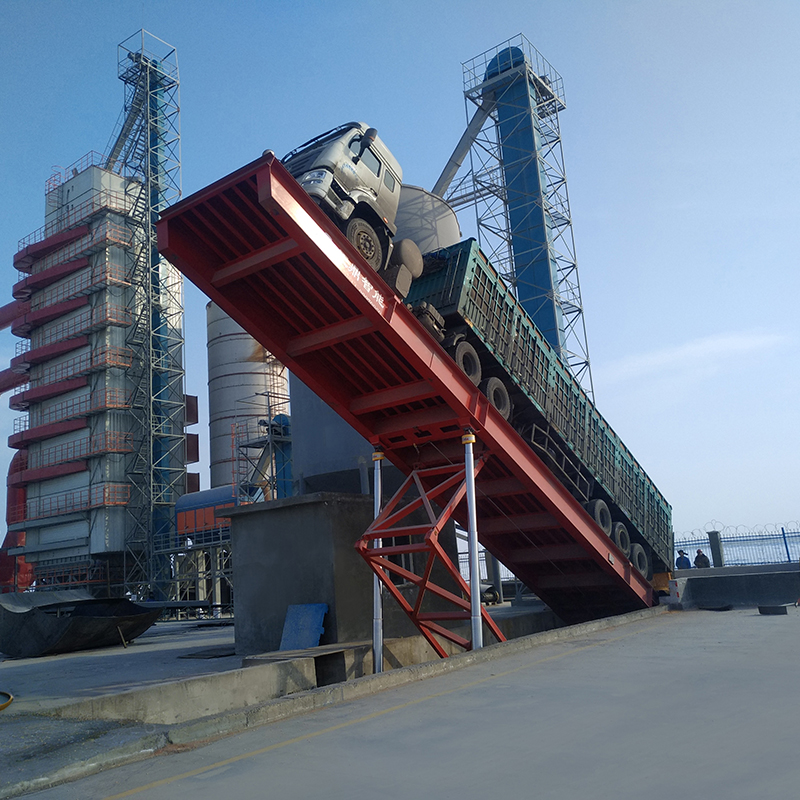
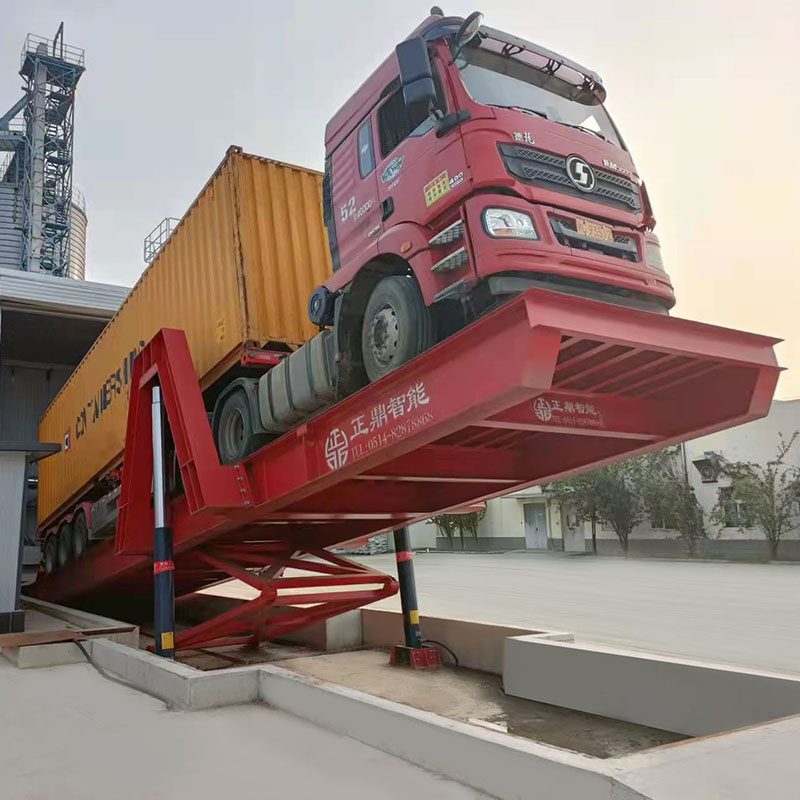
The four primary types of dump trucks are standard dump trucks, side dump trucks, off-road dump trucks (articulated haulers), and haul trucks (rigid frame). Understanding these classifications is essential for selecting the right bulk handler for your material handling needs. Each type offers unique advantages in terms of unloading efficiency, stability, and operational cost, making them suitable for different industries ranging from construction to mining.
The standard dump truck is the most common, utilizing a hydraulic ram to lift the bed for rear discharge. The side dump truck offers enhanced stability and rapid unloading system capabilities. Off-road dump trucks and haul trucks are designed for heavy-duty mining and construction applications requiring robust material handling solutions.
The Four Major Types of Dump Trucks Explained
When selecting a tipper system or truck dumper for your operation, understanding the distinct characteristics of each type is crucial. The table below provides a comprehensive comparison of the four types, highlighting their key features and typical applications.
| Type | Key Feature | Typical Capacity | Primary Application |
|---|---|---|---|
| Standard Dump Truck | Hydraulic rear lift | 10-30 tons | Construction, aggregate hauling |
| Side Dump Truck | Side tilting body | 15-30 tons | Open area dumping, rapid unloading |
| Off-Road Dump Truck | Articulated frame | 25-60 tons | Mining, rough terrain hauling |
| Haul Truck | Rigid frame design | 100+ tons | Large-scale mining |
The side dump truck is increasingly popular due to its enhanced safety features. Unlike traditional rear dumpers, the side dump truck can unload to either side, providing greater flexibility at job sites. The articulated frame of off-road dump trucks offers superior traction and maneuverability in challenging terrain, while rigid frame haul trucks are designed for maximum capacity in large-scale mining operations.
Figure 1: Dump Truck Type Performance Comparison (Higher Score Indicates Better Performance)
The side dump truck achieves the highest overall performance score due to its exceptional stability during truck unloading system operations. The side-dump design eliminates the tipping hazard commonly associated with rear-dump vehicles, making it one of the safest options available. For bulk material handling applications, the side dump truck provides rapid and efficient unloading, reducing cycle times and improving productivity.
When considering a truck dumper manufacturer for your operation, the side dump configuration offers significant advantages for applications requiring frequent unloading of aggregates, gravel, and other loose materials. The ability to discharge on either side of the truck provides flexibility in restricted job sites, while the low tipping angle minimizes the risk of accidental overturns.
Side Dump vs. Rear Dump: A Critical Comparison
The choice between a side dump truck and a standard rear dump truck significantly impacts operational safety and efficiency. This section examines the key differences that influence selection decisions for material handling professionals.
Figure 2: Performance Comparison Between Side Dump and Standard Dump Trucks
The data clearly shows that side dump trucks excel in critical areas of stability, safety, and versatility. This makes them particularly suitable for operations requiring frequent unloading in confined spaces or unstable terrain. For a bulk material dumper application, the side dump configuration provides the ideal combination of rapid discharge and operational safety.
When selecting a truck tipping system, consider the specific requirements of your material handling operation. The side dump design is particularly advantageous for grain unloading system applications, where rapid and clean discharge is essential to maintain product quality and minimize material loss during transfer operations.
Industrial Dumping Systems and Their Applications
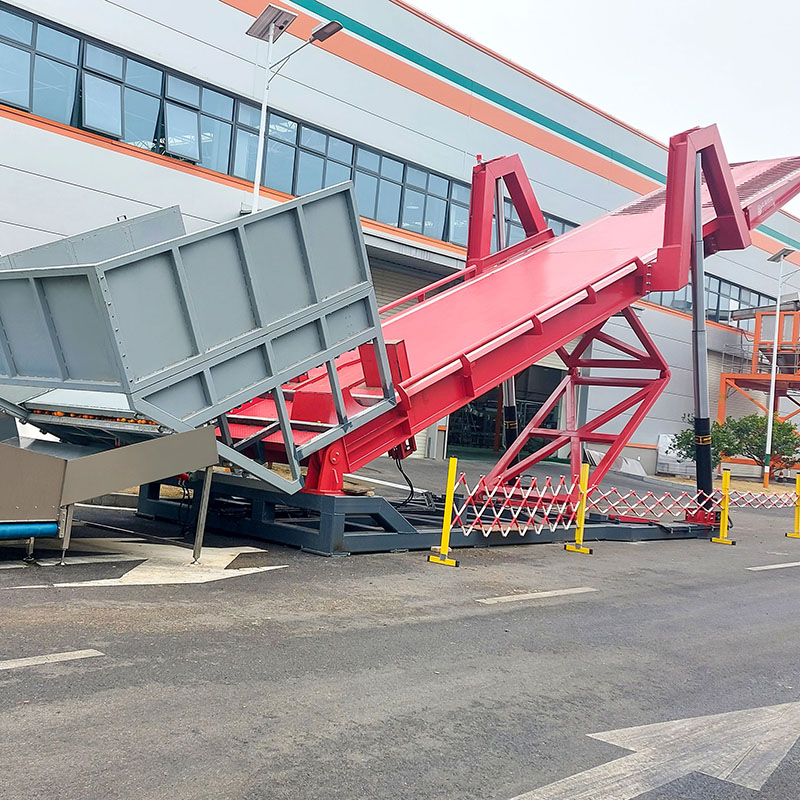
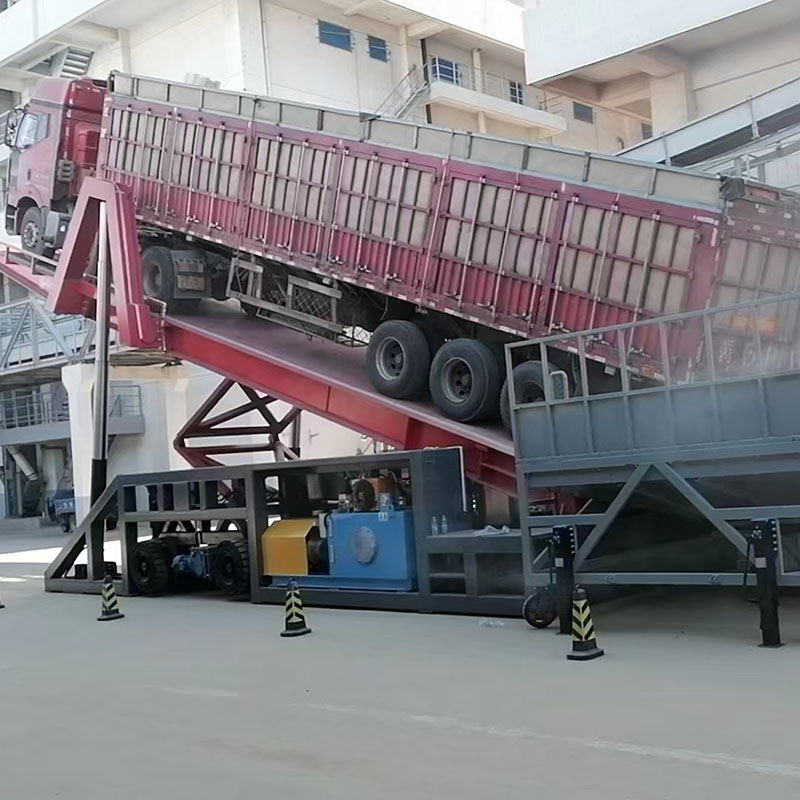
Beyond mobile dump trucks, industrial dumping station and fixed container dumper system solutions play a vital role in modern warehouse unloading equipment operations. These systems provide efficient material handling solutions for high-volume applications in food processing, chemical manufacturing, and bulk material distribution.
Figure 3: Performance Comparison of Industrial Dumper Systems
Industrial dumping stations demonstrate superior performance in throughput capacity and space efficiency, making them ideal for high-volume bulk material handling equipment factory operations. These systems can handle weights up to 5,000 pounds and are capable of discharging multiple containers simultaneously, significantly improving operational efficiency.
The container dumper system offers enhanced flexibility, accommodating various container sizes from drums to gaylords. This versatility makes it an excellent choice for operations requiring frequent changeovers between different container types and sizes. For a bulk unloading system application, the container dumper provides efficient, safe, and reliable material transfer solutions.
About Jiangsu Zhengding Intelligent Equipment Co., Ltd.
Jiangsu Zhengding Intelligent Equipment Co., Ltd. is a national high-tech enterprise mainly engaged in the research and development and manufacturing of intelligent logistics equipment. It can provide systematic solutions for the automatic loading and unloading of cars and containers for customers in different industries.
The company wholeheartedly provides users with various types of automatic loading and unloading equipment such as rear dumpers, side dumpers, car loading equipment, container flippers, etc.; it is one of the companies with a relatively complete range of automatic truck unloading equipment for cars and containers in China. The products are widely used in the steel, chemical, cement, coal, grain, oil and food industries, and are exported to Japan, Brazil, Egypt, Pakistan, India, the Middle East and Southeast Asian countries. Among them, the annual sales volume and technical performance of automatic loading and unloading equipment for cars are in the leading position in China.
Typical international users include Budweiser, Heineken, Buhler Group, Wilmar International, Cargill, DuPont, Louis Dreyfus, Charoen Pokphand Group, Saint-Gobain Group, etc., demonstrating the company's global recognition as a trusted industrial dumper supplier and truck dumper manufacturer.
Frequently Asked Questions
Q1: Which type of dump truck is safest for unloading operations?
A1: The side dump truck is considered one of the safest options because it can be emptied without the risk of tipping over, unlike rear-dump configurations that are prone to instability when raised.
Q2: What is the typical capacity of a standard dump truck?
A2: Standard dump trucks typically have a capacity ranging from 10 to 30 tons, while off-road dump trucks and haul trucks can carry up to 60 tons or more, with some haul truck models capable of carrying over 100 tons.
Q3: How does a side dump truck work?
A3: A side dump truck uses hydraulic rams to tilt its body to either the left or right side, spilling material to the side of the trailer. This design provides rapid unloading and enhanced stability compared to rear-dump designs.
Q4: What industries benefit most from industrial dumping systems?
A4: Industrial dumping systems are widely used in the food processing, chemical manufacturing, cement, mining, and agricultural industries for efficient handling of bulk material such as grain, minerals, and chemicals.


